Wellness is not a luxury or an extra – it is the foundation that helps your spine, scoliosis, and whole body handle the stress of daily life. When you combine targeted movement with purposeful recovery tools like Shockwave, Stimpod, Red light, and cold plunge/sauna, you give your body a better chance to calm pain, move more freely, and stay active for the long haul.
The Moment You Realize “Just Getting By” Isn’t Working
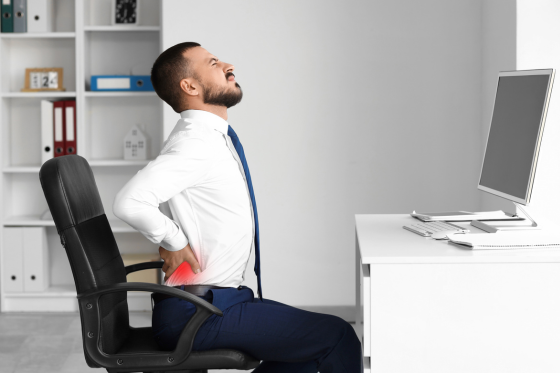
I often meet people for the first time when they say something like:
“I thought I could just push through it. But now my back keeps flaring up, I’m exhausted, and I feel like I’m falling behind in my own life.”
Maybe that sounds familiar.
For some, it is scoliosis that finally catches up with them. For others, it is years of sitting at a desk, stress, or old injuries that never fully recovered.
What they all have in common is this: at some point, “surviving the week” no longer works.
That is the point where wellness stops being a buzzword and becomes something very real.
What “Wellness” Really Means (Especially If You Have Scoliosis Or Back Pain)
Wellness is not about perfection, fancy routines, or never having pain again.
When I talk about wellness with my patients, I mean:
- How well your body recovers from stress and activity.
- How much reserve you have in the tank, physically and emotionally.
- How capable your spine and nervous system are of adapting to daily life.
If you have scoliosis or ongoing spine issues, this matters even more.
Your spine is already doing extra work to keep you upright and balanced. Without good recovery and wellness habits, that extra work can gradually turn into stiffness, flare ups, or limits on what you feel safe doing.
Your Spine Is Your Lifelong Support Structure
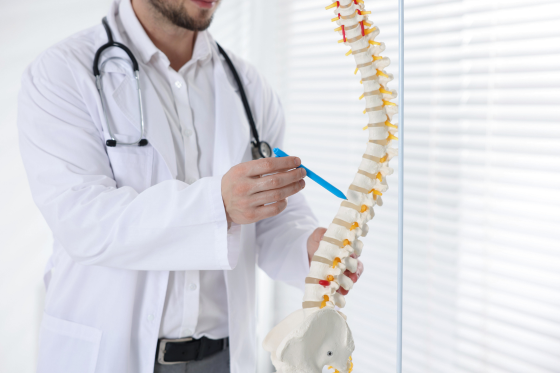
According to reputable health sources, most adults will experience significant back pain at some point in their lives. If you add scoliosis, previous injuries, or arthritis to the mix, the odds of pain and fatigue go up even more.
I like to think of the spine as a strong but sensitive support tower.
- The bones provide structure.
- The muscles and fascia are the cables and guy-wires.
- The nervous system is the control center that constantly adjusts everything.
Wellness is about taking care of the whole tower. Not just putting out fires when something hurts, but regularly tuning the system so it can handle storms.
Why Recovery Is Not A Luxury – It Is Part Of Healing
A pattern I see over and over again in the clinic is this:
- People are really good at pushing themselves.
- They are not nearly as good at letting themselves recover.
They sit all day, stress all evening, sleep poorly, and then try to “fix” everything with a single workout, stretch session, or weekend project.
Your spine and nervous system do not work that way.
Real change happens in the recovery time between stresses. Your tissues repair. Your nervous system recalibrates. Your muscles learn new patterns.
If you only focus on “doing more” and never on “recovering well,” you end up stuck in a cycle of:
- Short bursts of progress.
- Pain flare ups.
- Starting over.
Wellness – especially recovery-based wellness – is how we break that cycle.
The Recovery & Wellness Tools We Use At Align Therapy
At Align Therapy in Lehi, our starting point is always education and movement. For scoliosis and spine issues, that often means:
- Scoliosis-specific exercises.
- Postural training.
- Mobility and strength work.
- Breathing and core control.
But over the years, I have seen that some patients need more help calming pain, resetting irritated nerves, or jump-starting tissue healing.
That is why our clinic also has a “recovery side” with wellness and regenerative tools designed to support what we do in the therapy room.
Here is how some of these can fit into a bigger wellness plan.
Shockwave Therapy: Supporting Tissue Repair And Pain Relief
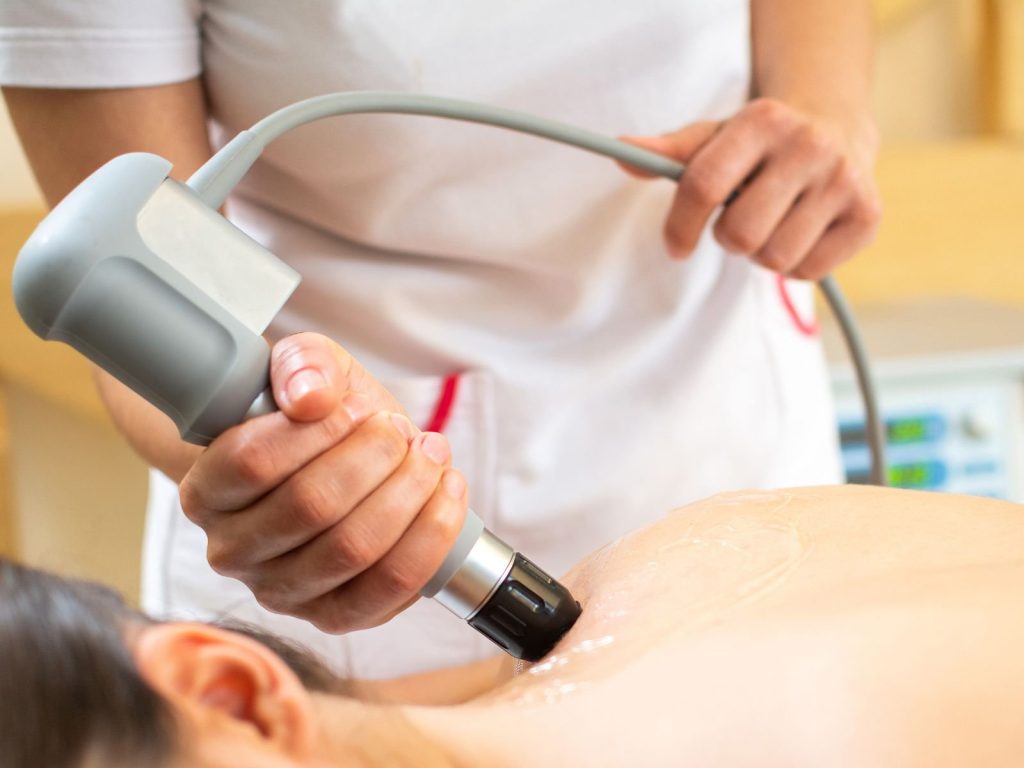
Extracorporeal shockwave therapy uses focused acoustic waves to stimulate tissues that are not healing well on their own. This might be stubborn tendon pain, hip or glute pain, or areas that stay tight and tender around the spine.
The shockwave device we use is a CE-marked medical device, which means it meets strict safety and performance standards. Research suggests that shockwave can help:
- Reduce pain in certain chronic tendon and soft-tissue conditions.
- Improve blood flow and stimulate local healing responses.
- Break up painful, dense, or sensitive areas in overloaded tissue.
In the context of scoliosis and spine care, we may use shockwave to help:
- Calm chronic hip or shoulder pain that comes from asymmetrical loading.
- Address stubborn knots and tender spots that limit how well you can move.
- Support the tissues so that your exercises become more effective.
It is not a stand-alone “fix,” but it can be a powerful teammate in a larger plan.
Stimpod Neuromodulation: Helping Calm Irritated Nerves
Some of the hardest pain to live with is nerve-related pain.
It might show up as:
- Burning or zinging down a leg or arm.
- Sharp, electric pains around the ribs in scoliosis.
- Persistent, sensitive spots that do not match simple muscle pain.
Stimpod is a neuromodulation device that delivers very specific electrical signals to the nervous system. The device we use is CE-marked as a medical device.
The goal is not to “zap” the nerve but to help reset overly sensitive pathways.
In treatment, we may use Stimpod to:
- Reduce nerve hypersensitivity.
- Create a window of pain relief so you can move more comfortably.
- Support retraining of movement patterns without your nervous system “overreacting.”
Again, Stimpod is most effective when it is paired with targeted movement, posture work, and education.
Red Light Therapy: Gentle Energy To Support Healing
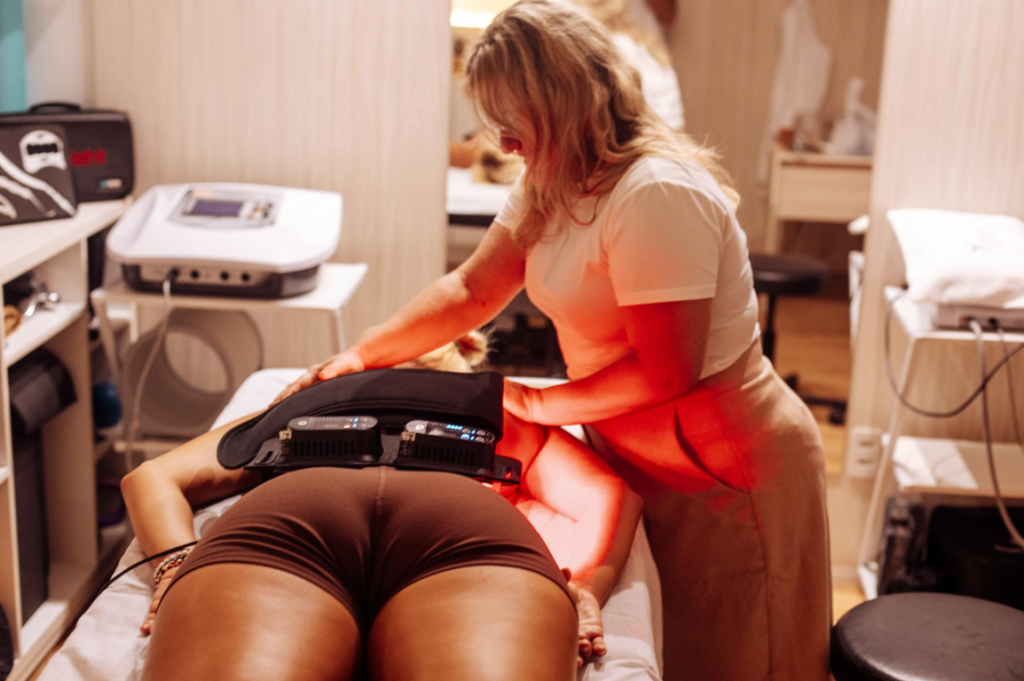
Red light therapy (also called photobiomodulation) uses specific wavelengths of red and near-infrared light to support cellular function. The devices we use are CE-marked where required as medical devices.
Studies suggest that red light therapy can:
- Support local circulation.
- Influence inflammation in a helpful way for some conditions.
- Support tissue recovery after strain or overuse.
For spine and scoliosis patients, we may use red light therapy to:
- Help calm irritated muscles around the spine.
- Support recovery after manual therapy or exercise.
- Encourage tissues to tolerate gradual increases in activity.
It is painless and non-invasive, and sessions are typically short.
Cold Plunge And Sauna: Training Your Body To Handle Stress Better
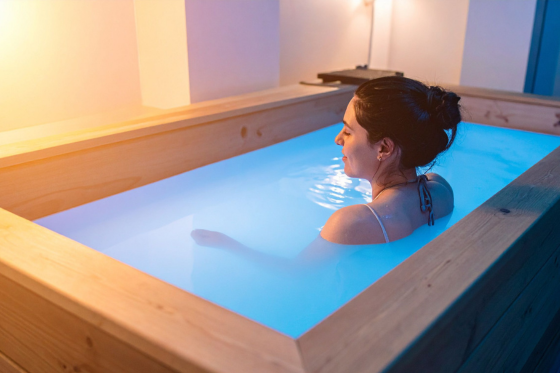
Cold exposure and heat therapy are two of the oldest wellness tools we have. They are not for everyone, and they must be used carefully, but when they are appropriate, they can be powerful.
At Align Therapy, we use controlled cold plunge and sauna as part of a broader recovery strategy.
Cold exposure may help:
- Train your blood vessels and circulation.
- Support your nervous system in handling stress.
- Reduce soreness after certain types of activity.
Sauna and heat may help:
- Relax muscle tension.
- Support circulation and recovery.
- Provide a calm, decompressing environment for your nervous system.
For someone with scoliosis or chronic back issues, we might pair:
- Gentle movement or stretching.
- A cold plunge/sauna session (as appropriate).
- Follow-up breathing and recovery work.
The point is not “toughing it out” in cold or heat. The point is teaching your body that it can safely move in and out of stress – and then back into calm again.
How Wellness Supports Scoliosis Care At Every Age
I work with kids, teens, adults, and older adults who have scoliosis. Wellness looks a little different for each stage of life, but the principles are similar.
Teens And Young Adults With Scoliosis
For this group, wellness often means:
- Building strong, balanced habits early.
- Learning to move with confidence, not fear.
- Using recovery tools to help with growth-spurt soreness, sports, or activity.
Recovery therapies like red light or occasional shockwave (when appropriate) can sometimes help manage localized pain so they can keep showing up to their exercises and activities.
Busy Adults Balancing Work, Family, And Pain
Many of our patients in their 30s, 40s, and 50s tell me:
> “I don’t have time to be down for weeks. I just need my body to keep up.”
Wellness for this group is about:
- Protecting and improving function.
- Managing stress and energy.
- Preventing small issues from becoming big ones.
Recovery sessions might combine:
- Targeted manual therapy and movement.
- A session with Stimpod or shockwave on a stubborn area.
- Time in the cold plunge/sauna or red light to support overall recovery.
Older Adults Protecting Independence
Wellness in later decades is really about staying independent as long as possible.
For older adults with scoliosis or spine changes, we focus on:
- Balance and fall prevention.
- Strength for everyday tasks.
- Managing stiffness and pain so movement stays possible.
Gentle recovery tools, used carefully, can help:
- Calm pain enough to allow for walking and exercise.
- Improve comfort between sessions.
- Build confidence that their body is still adaptable.
Wellness If You Do Not Have Scoliosis (But Feel Worn Down)
You may not have a specific spine diagnosis, but you might feel:
- Stiff every morning.
- Drained by mid-afternoon.
- Nervous that your back is “one wrong move” away from going out.
Wellness matters for you too.
The truth is, our modern lifestyle is hard on the spine:
- Long hours sitting.
- High stress.
- Little time for real recovery.
You do not need to wait until something breaks to start caring for your spine. Movement, recovery sessions, and simple daily habits can all help you stay ahead of bigger problems.
Simple Wellness Habits You Can Start At Home
Not every wellness step requires special equipment. Here are a few simple practices I often give my patients:
1. Micro-Breaks For Your Spine
Every 30 to 60 minutes, stand up and move. Even 1 to 2 minutes of simple movement can:
- Change the load on your spine.
- Wake up your postural muscles.
- Give your nervous system a short reset.
2. Gentle Daily Mobility
You do not need a 60-minute routine.
Try 5 to 10 minutes of:
- Gentle spine rotations.
- Hip and shoulder circles.
- Easy breathing exercises that help your ribs and lower back move.
If you have scoliosis, a therapist can help you choose movements that match your specific curve pattern.
3. Walking As A Baseline
Walking is one of the simplest wellness tools we have. It supports circulation, mental health, and spine health.
Start with what you can do comfortably, even if that is just a few minutes at a time. Small, consistent walks beat occasional big efforts.
4. One Small Sleep Upgrade
Recovery does not work well without decent sleep.
Pick one tiny improvement:
- Turning off screens 20 to 30 minutes earlier.
- Keeping bedtime and wake time more consistent.
- Doing 3 to 5 slow, deep breaths before you lie down.
You do not have to fix everything at once. Just create a slightly better environment for your body to heal.
What A Recovery Session At Align Therapy Can Look Like
People sometimes worry that a recovery or wellness session will be complicated or overwhelming. In reality, we keep it simple and personal.
A typical recovery-focused visit might include:
- A quick check-in. How have you been moving? What hurts? What feels better? What are you trying to do in real life – work, lifting kids or grandkids, sports, hobbies?
- Targeted movement or hands-on work. We might do some scoliosis-specific exercises, joint or soft-tissue work, or postural retraining.
- A recovery tool that matches your needs. For example:
- Shockwave on a stubborn tendon or tight spot.
- Stimpod on an irritated nerve pathway.
- Red light over sore spinal muscles.
- A guided cold plunge/sauna sequence if appropriate for you.
- Education and planning. We talk about what you can do at home, what to watch for, and how today’s session fits into your bigger wellness picture.
The goal is not to “try everything” in one day. It is to create a clear, sustainable path forward.
Why Wellness Matters Emotionally, Not Just Physically
Something I hear a lot from patients is:
> “I just want to feel like I’m in control again.”
Chronic pain, scoliosis, or feeling unwell for a long time can make your world feel smaller. You may avoid trips, hobbies, or time with loved ones because you are not sure how your body will respond.
Wellness is not only about muscles, discs, or nerves. It is about:
- Rebuilding trust in your body.
- Expanding what feels possible.
- Giving yourself permission to invest in your own health.
When you see that your body can respond – that pain can decrease, that movement can improve, that you can recover better between activities – it changes how you approach each day.
You deserve that.
Taking The Next Step: You Do Not Have To Do This Alone
If you are reading this and thinking:
> “I know I need to do more for my wellness, but I don’t know where to start,”
you are not alone. That is exactly what we help people with every day.
At Align Therapy, we combine scoliosis and spine-specific care with recovery and wellness tools to create a plan that fits real life.
If you would like to explore how our wellness services might support you, your spine, and your long-term health, you can learn more here:
You do not have to wait until things are “bad enough.” Small, consistent steps create real change, and you deserve to move with confidence.
Information only, not a substitute for professional advice. Always consult your healthcare provider or a qualified clinician before starting new treatments, recovery methods, or exercise programs.