A story I see all the time
Someone walks into my clinic in Lehi or St George Utah, sits down, and says something like:
> “I’ve been told my scoliosis is mild. > > I’ve done some core exercises, been to a PT, saw a chiropractor for a while, but my back still hurts and my posture is getting harder to manage. > > Am I missing something?”
If you have scoliosis, you might recognize yourself in that story.
You’ve tried to be proactive. You’ve done what you were told. But deep down, it feels like no one has really looked at your curve in detail.
That is exactly where specialized scoliosis treatment becomes so important.
Why scoliosis is not a “just strengthen your core” problem
Scoliosis is a three-dimensional spinal curve. That means the spine is not only bending to the side, but also rotating and affecting how your ribcage, shoulders, and pelvis line up. It can change how you breathe, how you stand, and how your muscles work day to day.
In the U.S., reputable health sources estimate that 3 percent of adolescents have scoliosis, and many of them carry that spinal curve into adulthood. The statistics on scoliosis in adults is shocking, where 30-40% of those over 60 will have a spinal curve. For some, the curve stays fairly stable. For others, pain, fatigue, or cosmetic changes creep in over time.
Here is the key point:
- General core strengthening can be helpful for almost anyone.
- But scoliosis is not just a “weak core” issue.
- It is a specific shape and rotation of your spine that needs a specific plan.
If we ignore the 3D nature of your spinal curve and just do generic exercises, we can easily miss the real opportunity to help you move and feel better.
What specialized scoliosis treatment looks like
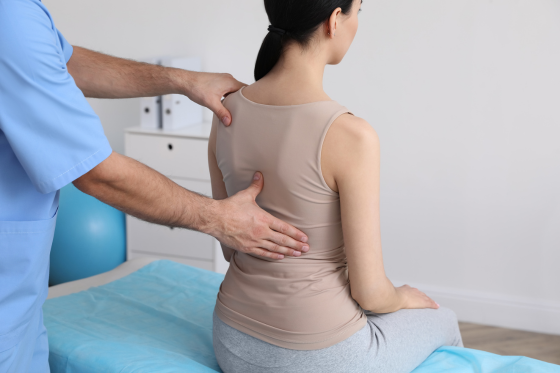
When I talk about specialized scoliosis treatment, I mean care that is built around your exact curve, not just your pain level.
That usually includes:
- Looking closely at your X-rays (if available) to understand your curve pattern.
- Assessing how your spine moves in all three dimensions.
- Watching how you stand, sit, walk, and breathe.
- Talking through your goals – less pain, better posture, more energy, or slowing progression.
Then we design a plan that is curve-specific. Your exercises, positions, and postural cues are based on whether your main curve is thoracic, lumbar, double major, or something more complex.
It is like the difference between wearing a “one size fits all” shirt and having something tailored to your body. The tailored approach simply fits better.
The Schroth Method: more than generic exercises
One of the main tools we use at Align Therapy in Utah is the Schroth Method. The Schroth Method is a specific, research-backed approach to non-surgical scoliosis treatment that focuses on the 3D nature of the spinal curve.
Schroth work typically includes:
- 3D auto-correction – learning how to consciously de-rotate and lengthen your spine toward a more balanced position.
- Specific breathing techniques – especially into the “collapsed” side of the ribcage.
- Postural training – how to sit, stand, and move in ways that support your spine all day, not just during therapy.
- Muscle endurance and control – building a “safety net” of support around your spine.
Studies have shown that Schroth-based programs can help improve posture, reduce pain, improve quality of life, and reduce curve progression in growing adolescents. While it is not a cure or a guarantee, it is one of the most studied conservative options we have for scoliosis.
This is why I’m so committed to having Schroth-trained therapists in our clinic. It adds precision to everything we do.
Why extra Schroth training matters (and what Janessa is learning)
Janessa, one of our talented therapists at Align Therapy in Lehi Utah, is now taking her Schroth training to the next level. She is going through advanced coursework focused on:
- More complex curve patterns.
- Post-surgical scoliosis – helping people move confidently after fusion or other spine surgeries.
- Adult scoliosis – where stiffness, pain, and day-to-day function become bigger issues.
These are often the people who feel most stuck. They are told “you’re done growing” or “your surgery is healed,” and then left to figure out the rest on their own.
By deepening her Schroth Method skills, Janessa is learning how to:
- Adapt exercises for fused segments.
- Respect surgical hardware while still working above and below it.
- Work with adults who may also have arthritis, disc changes, or long-term muscle imbalances.
For our clinic, this is a big deal. It means we are not just “doing some scoliosis exercises.” We are building real, specialized expertise in complex scoliosis care.
The cardiologist analogy: why specialization matters
Think about this in medical terms.
If you had a serious heart problem, you would not stop at, “My general practitioner said my blood pressure looks okay.” You would go see a cardiologist. Why? Because they live and breathe heart problems every day. They know the patterns, the risks, and the best treatment options in detail.
Scoliosis deserves that same level of respect.
Your spine is not just “a bit crooked.” It is a unique 3D shape that affects your entire body. The therapist who helps you should:
- Understand scoliosis-specific assessment.
- Be trained in methods like Schroth that target the full 3D curve.
- Know how to adjust for age, surgery history, and curve severity.
That is what we mean by proactive specialized scoliosis treatment. We are not waiting for things to get worse. We are using specialized knowledge to support you now.
Who can benefit from proactive specialized scoliosis treatment
Over the years, I have seen specialized scoliosis care help many different people in Utah and around the country. You may relate to one of these groups:
Teens and young adults
Maybe you or your child has been told, “Your curve is small; we’ll just watch it.” Watching might seem appropriate medically, but that does not mean you have to sit on your hands. Learning how to move, sit, and stand with a scoliosis-aware approach can build confidence and control, and proactively treats the curve progression.
Adults living with a long-standing curve
You might feel like your scoliosis is “old news,” but your body is telling you otherwise. Maybe your back aches by the end of the day, or your posture feels harder to maintain. Specialized, non-surgical scoliosis treatment can help you:
- Manage pain.
- Improve endurance for daily tasks.
- Feel more in control of how your curve affects your life.
Post-surgical scoliosis
If you have had a spinal fusion or other scoliosis surgery, you may think therapy is off the table. In reality, many people benefit from learning how to move above and below the fusion, how to protect their spine, and how to build strength in safe, targeted ways.
This is a big part of what Janessa’s advanced Schroth training is about.
What care looks like at Align Therapy

At Align Therapy in Lehi, Utah, our process is designed around education that empowers lasting change.
A typical journey might include:
- Discovery Visit (DV) – a chance for you to meet with us, share your story, and see if we are the right fit without pressure.
- Detailed scoliosis assessment – posture, movement, breathing, and, when available, reviewing your imaging.
- Curve-specific exercise program using the Schroth Method and other targeted strategies.
- Home program and lifestyle coaching – how to sit, sleep, lift, and move in scoliosis-friendly ways.
- Ongoing progression – adjusting your program as you get stronger, more aware, and more confident.
If you want to start learning right away, we keep a lot of helpful information in our Scoliosis Portal. But information alone is not enough. Your curve and your life are unique. That is where one-on-one guidance really makes a difference.
You deserve specialized help for your unique spine
One thing I remind my patients often is this:
You did not choose your spinal curve. But you can choose how you respond to it.
You do not have to settle for “generic back exercises” or “we’ll just watch it.” With specialized training in the Schroth Method and a clinic that focuses deeply on spine and posture, our whole team – including Janessa with her advanced scoliosis training – is here to help you move with more confidence.
If you are ready to explore what specialized, non-surgical scoliosis treatment could look like for you or someone you love, the next step is simple.
Take the next step
If you are curious, worried, or just tired of feeling like no one truly “gets” your scoliosis, I would love for you to come in and talk with us.
You can:
- Book a Discovery Visit online and sit down with a scoliosis-focused therapist.
- Ask your questions.
- Get a clear sense of your options.
Small, consistent steps create real change. Let’s take the next step together.