Many people with scoliosis are told long lists of things they “can’t” do – no running, no lifting, only gentle exercise. In my experience, most spines are far less fragile than that. With individualized, non-surgical scoliosis treatment and the right progression, most adults can safely stay active, strong, and doing the things they love.
The first question I hear: “What can I not do?”
When I first meet someone with scoliosis, I usually start with a simple question: “What questions do you have for me?”
Very often, the first thing they say is, “I just want to know what I can’t do.”
They go on to tell me what they have already heard from well-meaning friends, providers, or the internet.
- “You should only do low impact things like swimming.”
- “Don’t run, the impact is bad for your spine.”
- “Don’t lift weights, it will compress your spine.”
By the time they get to me, many people feel scared to move.
They worry that one wrong step or one wrong exercise will make their scoliosis worse.
Why so many mixed messages about scoliosis treatment?
I understand where the fear comes from.
Scoliosis is a three-dimensional curve of the spine, and it looks dramatic on an X-ray.
It makes sense that people would assume the spine is “weak” or “unstable” and that activity must be risky.
But here is the problem: there is very little high-quality research that says, “People with scoliosis must avoid this activity” or “This exercise is dangerous for everyone with scoliosis.”
In fact, current guidelines for conservative, non-surgical scoliosis treatment focus on education, specific exercises, and staying active, not on long lists of restrictions.
So when I hear people being told they can’t run, can’t lift, or can’t participate in the things that make them feel alive, it worries me.
Not because I want everyone to go out and lift heavy weights right away.
But because fear and inactivity can sometimes cause more harm than the scoliosis itself.
What the research actually says about activity and scoliosis
Right now, the research on which specific sports or activities are “good” or “bad” for scoliosis is limited.
We do have growing evidence that:
- Targeted scoliosis-specific exercises, like the Schroth Method, can help improve posture, body awareness, and quality of life.
- Strength, endurance, and balance training are generally helpful for pain and function in many spine conditions.
- Movement in general is good for the nervous system, the muscles, and our emotional health.
What we don’t have is strong evidence that everyday activities like walking, running, or resistance training automatically make scoliosis worse for all people.
This is why, in my clinic in Utah, I rarely give blanket “never do this” rules.
Instead, I look at you – your curve, your strength, your pain, your goals – and we build from there.
Your spine is strong, not fragile
Something I remind my patients often is this: a curved spine is still a living, adaptable structure.
It has muscles, ligaments, and bones that respond to load, just like any other spine.
Yes, scoliosis changes alignment and mechanics, and we absolutely need to respect that.
But respecting your spine is different from fearing it.
Your body is designed to move.
When we build strength, especially in a scoliosis-specific way, we are not “wearing out” the spine.
We are building a safety net of muscular support around it.
How I think about activities: impact, compression, and your goals
When someone with scoliosis comes to see me in Lehi or St George for non-surgical scoliosis treatment, here is how I approach the “What can I do?” question.
First, I want to know:
- What do you want to be able to do? Run? Lift? Hike? Play pickleball? Keep up with your kids or grandkids?
- What are you currently doing, and how does it feel?
- Where are you noticing pain, stiffness, or fatigue?
Then we look at two big ideas: tolerance and progression.
If your body currently does not tolerate an activity (for example, you get sharp pain every time you run), that doesn’t automatically mean running is “bad” for your scoliosis.
It usually means your body is not ready for that load yet.
So we back up, build a foundation, and then gradually reintroduce the activity in a smarter way.
Running with scoliosis

Many of my patients have been told never to run again.
Sometimes they accept that for years, even if they miss it deeply.
If you are having pain with running, here is how we might approach it:
- Check your strength in your hips, core, and trunk.
- Look at your running form, breathing, and how your spine moves.
- Use scoliosis-specific exercises (such as Schroth Method breathing, alignment work, and trunk control) to improve your base.
- Start with walking intervals, short jogs, or softer surfaces, and slowly build your tolerance.
Are there times when I recommend avoiding running for a season?
Yes.
If pain is high, if there is significant weakness, or if your body clearly is not tolerating impact, we might step away from running temporarily.
But the goal is usually to work toward returning to it when possible, not to ban it forever just because you have scoliosis.
Lifting weights and strength training
Another big fear I hear is about “compression” on the spine from lifting weights.
It is true that load puts some compression through the spine.
But again, load is not automatically bad.
In many cases, appropriately dosed strength training helps the body feel more supported, more stable, and more resilient.
Here is how I decide what is safe for you:
- If you have a lot of weakness or poor control, I may not want you doing heavy loaded exercises right away.
- We might start with bodyweight movements, bands, or very light weights and focus on alignment and control.
- As your strength and confidence grow, we gradually increase load in a way that respects your curve and your symptoms.
My goal is not to keep you “safe” by keeping you weak.
My goal is to help you get strong enough that daily life, hobbies, and even higher-impact activities feel more comfortable and sustainable.
Swimming, yoga, and other “gentle” exercises
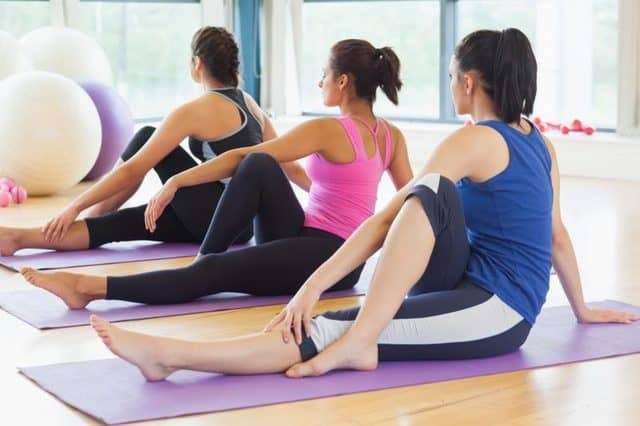
Swimming, yoga, Pilates, and other low-impact activities can be wonderful tools for many people with scoliosis.
They can help with mobility, endurance, and body awareness.
But they are not the only safe options.
Sometimes people are told, “You should just swim,” as if that is the only path left.
If you love swimming, that is great.
If you do not, we can absolutely explore other ways to move, build strength, and protect your spine.
Why individual scoliosis treatment matters
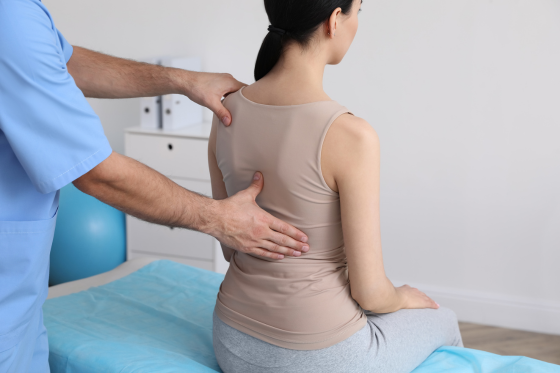
One pattern I see again and again is this: two people with scoliosis can have the same curve on X-ray and completely different experiences in their bodies.
One might run marathons with no pain.
Another might struggle to walk a block comfortably.
This is why scoliosis treatment needs to be individual.
At Align Therapy in Utah, we use non-surgical scoliosis treatment approaches like the Schroth Method to:
- Teach you how your specific curve pattern affects your posture and movement.
- Help you find positions and exercises that lengthen, de-rotate, and support your spine.
- Build strength and endurance in a way that matches your goals – not just what a textbook says.
If you want to dive deeper into how we approach scoliosis here, you can explore our scoliosis resources at https://aligntherapyutah.com/scoliosis-portal/.
Whether you are in Lehi, St George, or elsewhere in Utah, the aim is the same: education that empowers lasting change.
Practical steps if you are feeling limited right now
If you are reading this and thinking, “I have given up so many things because of my scoliosis,” here are some gentle next steps.
1. Shift the question
Instead of asking, “What can I not do?” try asking, “What would I love to get back to, and what would it take to work toward that?”
This small shift opens the door to possibility instead of shutting it.
2. Get a scoliosis-specific assessment
A general exam is helpful, but a scoliosis-focused assessment goes deeper.
We look at your curve type, mobility, strength, breathing patterns, and how you move in real-life positions.
This helps us build a plan that fits you instead of generic restrictions.
3. Start small, but be consistent
Small, consistent steps create real change.
This might look like:
- 5–10 minutes a day of scoliosis-specific exercises.
- Short walks or light strength sessions a few times per week.
- Practicing posture corrections during daily tasks like cooking or working at a desk.
The goal is not perfection.
The goal is steady progress.
4. Use discomfort as information, not fear
Some muscle soreness or mild discomfort as you start moving more can be normal.
Sharp, worsening, or persistent pain is a signal we need to adjust.
Working with someone who understands scoliosis helps you interpret those signals without jumping straight to fear.
5. Build a team that believes in your potential
You deserve a care team that sees you as more than your X-ray.
In my experience, when people feel believed in, supported, and educated, they are much more likely to stay active and engaged in their own care.
Movement is medicine – for your body and your mind.
You are not fragile, and you are not alone
Over the years, I have worked with many adults who came in convinced their active life was over because of scoliosis.
Again and again, I have seen them learn about their curve, build strength, and return to activities they thought were gone for good.
Not by ignoring pain.
Not by pushing recklessly.
But by respecting their spine, progressing smartly, and refusing to live under unnecessary limits.
You deserve to move with confidence.
You deserve to stay strong, happy, and active.
If you are ready to explore what you can do with scoliosis, there is hope, and there are options.
Important reminder: This article is for information and education only and is not a substitute for medical advice, diagnosis, or treatment. Please speak with a qualified healthcare professional about your specific situation.
If you would like guidance that is tailored to your spine and your goals, we would be honored to help.