
When you are told to “wait and see”
In my clinic in Lehi, Utah, I often meet adults who tell a familiar story.
They were diagnosed with scoliosis as a teen, sat in a room with an X-ray up on the light board, and heard some version of, “Your curve is mild. We will just wait and see. Come back in 6 to 12 months.”
No one really explained what scoliosis was doing to their body.
No one showed them how to sit, stand, or move differently.
No one taught them exercises specific to their curve.
So they waited.
Thirty years later, they are in my office with back pain, fatigue, stiffness, or a sense that their posture is changing faster than they would like. And they often ask me the same question:
> “Was there something I could have done earlier besides just waiting?”
My answer is almost always: yes, there was – and there still is.
What the “wait and see” approach really means
“Wait and see” sounds neutral and safe, but for scoliosis it usually means this:
- No active education
- No scoliosis specific exercise
- No support for how you feel about your body changing
Sometimes, careful monitoring without immediate intervention is reasonable, especially when a curve is very small and the child is growing quickly.
But even then, I do not consider education, posture coaching, and gentle, age-appropriate movement to be optional.
Without that support, “wait and see” often becomes:
- Wait and worry
- Wait and get stiffer
- Wait and lose confidence in your body
For many adults I see, that approach carried into adulthood. Their scoliosis may not have been considered “severe” enough for surgery, so they were told, “There is nothing else we can do.”
That is where I strongly disagree.
Why early, active scoliosis care matters
According to reputable spine organizations, scoliosis affects 2 to 3 percent of the population, and many of those people will never need surgery. But that does not mean their scoliosis has no impact.
Over the years, I have learned that curves are only part of the story. The other part is how your body responds to the curve:
- Muscles tighten and shorten on one side
- Other muscles become weak or overstretched
- Breathing can become shallow on the compressed side of the ribcage
- Your nervous system may stay on alert, waiting for pain
When we take an active approach early – whether that is in your teens, 30s, 50s, or beyond – we are not just chasing numbers on an X-ray. We are working on:
- Building a “safety net” of muscle support around your spine
- Improving posture in real-life positions: sitting at a desk, driving, playing with kids or grandkids
- Training more balanced, efficient breathing
- Reducing pain and fear around movement
Research on scoliosis specific exercise, including the Schroth Method for scoliosis, shows promising benefits for posture, quality of life, and in some cases curve progression in adolescents. For adults, studies and clinical experience suggest improvements in pain, function, and body awareness, even when the bones are no longer growing.
We cannot guarantee what your curve will do, but we can absolutely work on how your body lives with it.
What is the Schroth Method?
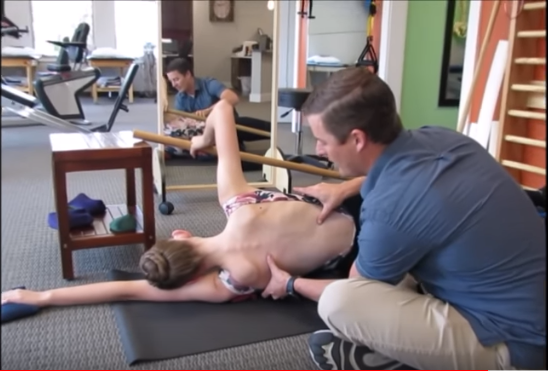
The Schroth Method is a type of physical therapy that was developed specifically for scoliosis.
Instead of general back exercises, Schroth looks at your spine in three dimensions – front to back, side to side, and in rotation. Then we design movements, positions, and breathing patterns just for your curve pattern.
I like to describe Schroth as learning a new “postural language” for your body.
Key principles of Schroth scoliosis specific exercises
Here is what we focus on in Schroth based treatment:
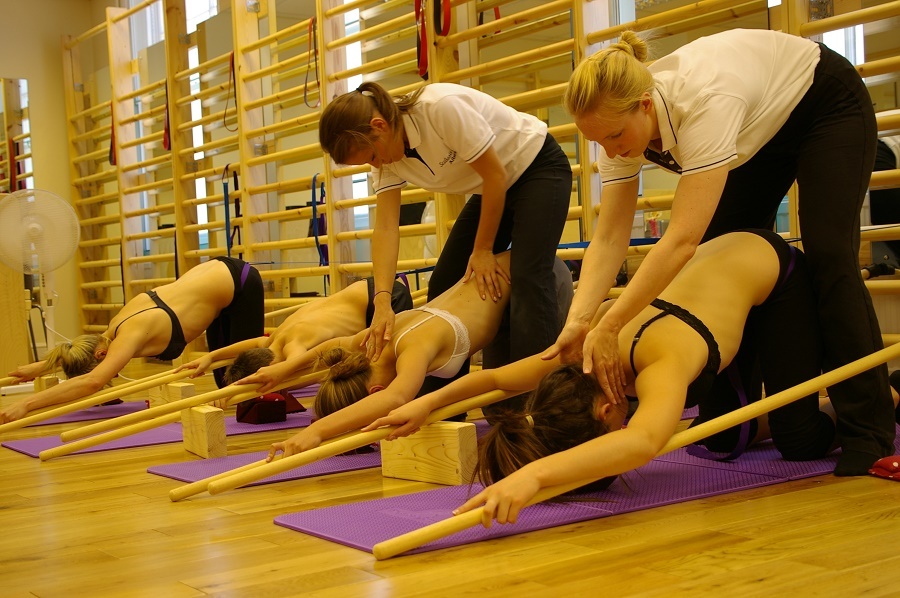
- 3D posture correction
We use specific positions (like side-lying, sitting, or standing against a wall) to gently guide your spine out of its usual collapsed pattern and into a longer, more balanced shape. - Rotational breathing
You learn to direct your breath into the areas of your ribcage that are usually compressed. Over time, this can help expand those areas and support better trunk alignment. - Muscle balance
We train the muscles that need to work harder and help relax the ones that are doing too much. The goal is not “perfect symmetry,” but more efficient, comfortable support. - Functional carryover
Once you learn your correction and breathing, we bring it into daily life: how you sit at the computer, unload the dishwasher, lift, walk, or exercise.
Schroth exercises are not one-size-fits-all. Two people with the same degree of curvature may have very different patterns and therefore very different programs.
Schroth vs “wait and see”: what actually changes?
When you compare “wait and see” with active Schroth-based care, the difference is not just physical. It is emotional and practical too.
With “wait and see”:
- You may feel like a passive observer while your X-rays change
- You rely on hope alone that things will not get worse
- You receive little guidance on what you can safely do
With Schroth based, scoliosis specific exercise:
- You become an active participant in your care
- You understand your curve pattern and what helps it
- You build a toolbox of positions, exercises, and breathing strategies
- You have a plan for flare-ups, long days, travel, or new activities
In my experience, that sense of agency is often just as important as the physical changes. When people understand their scoliosis and have concrete tools, fear goes down and confidence goes up.
Is it ever too late to start Schroth?
I hear this question all the time from people in their 30s, 40s, 50s, and beyond.
“I am done growing. Is there still a point?”
From years of working with adults with scoliosis, my answer is yes – there is a lot we can still do.
Even if your bones are fully matured, your muscles, joints, and nervous system can still change. Adults often notice:
- Less pain or fewer flare-ups
- Improved standing and sitting tolerance
- Better balance and endurance
- A feeling of being more “lifted” or open through the trunk
We are usually not chasing big curve changes on the X-ray in adulthood. Instead, we focus on how you function:
- Can you sit through a workday without needing to collapse into your curve?
- Can you walk longer without one side tightening up?
- Do you feel more even and stable when you stand or carry things?
Small, consistent steps create real change, even decades after diagnosis.
What Schroth based treatment looks like at Align Therapy
Every clinic is different, so let me share how we typically approach scoliosis specific exercise at Align Therapy.
1. A detailed evaluation
We start by listening to your story: when you were diagnosed, what you were told, what you have tried, and what worries you most now.
We then look at:
- Your posture from different angles
- How your spine and ribs move
- Muscle strength and flexibility
- How scoliosis is affecting your daily life and goals
If you have recent X-rays, we review them with you in a way that makes sense, so you are not just staring at numbers and angles.
2. Understanding your unique curve pattern
Using what we learn, we identify your specific curve pattern. This helps us choose the right starting positions and corrections for your Schroth program.
We talk through what that means in everyday language, not just medical terms, so you walk away understanding your own spine better.
3. Building your Schroth program
Next, we teach you:
- A personalized set of Schroth positions and exercises
- How to do rotational breathing for your pattern
- How to find your “corrected” posture in sitting and standing
You practice these with close guidance until they feel clear and doable at home.
4. Bringing it into real life
We then apply your scoliosis specific corrections to:
- Your work setup and sitting positions
- How you stand, bend, and lift
- The sports or hobbies you want to keep doing
Our goal is not to keep you in a clinic forever. Our goal is education that empowers lasting change, so you know how to care for your spine long term.
5. Adjusting over time
Your body changes with age, work, stress, and life. We check in, progress your exercises, and troubleshoot new challenges so your program grows with you.
You do not have to “wait and see” anymore
If you or someone close to you has been living with scoliosis under a “wait and see” plan, it is understandable to feel frustrated, stuck, or even a little abandoned.
You deserve more than that.
Scoliosis is not your fault, and you do not have to tackle it alone. With the Schroth Method for scoliosis and other scoliosis specific exercises, there is a more active, hopeful path.
At Align Therapy, we help people move from watching their scoliosis from the sidelines to working with it in a practical, compassionate way.
If you are ready to explore what that could look like for you, we would be honored to walk that path with you.
Book a free Discovery Visit to learn about treatment options. You can schedule online at aligntherapyutah.com or call us at 801-980-0860 to talk with our team.