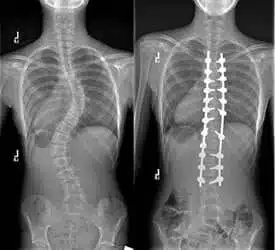
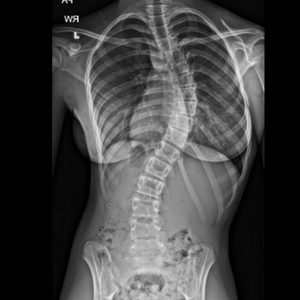
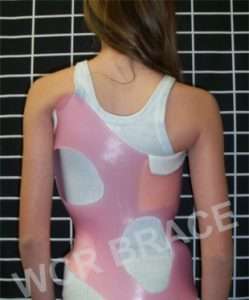
One of my greatest joys as a scoliosis therapist is seeing my patients get stronger, reduce their curve, and avoid surgery. Unfortunately, though, this isn’t always the case. With so many variables to what causes progression of the curve, sometimes we are just not successful.
There are many reasons why conservative scoliosis treatment fails. I want to just highlight the top 5.
Top 5 Reasons Scoliosis Treatment Fails
Lack of Consistency
Probably the biggest reason I see for scoliosis treatment failing is when someone does not do the exercises consistently. To be effective, scoliosis specific exercises need to be done at least 5 days a week. This is the minimum.
In Younger Patients
In Adolescent Idiopathic Scoliosis, the reason for this consistency is that they are growing. Their growth plates are active, and as the bone grows the curve does as well. This is because the shape of the bones is changing. Without an external force counteracting that change, such as a brace or muscle contraction, the bone continues to follow the curve.
This is also why consistency is so important with bracing. The external force of the brace pushing the curve back to midline counteracts the growth in the direction of the curve. The result is less bony change, and less curve.
One big problem though with scoliosis specific exercise, unlike the brace, we have to consciously turn on the muscles to get them to do this…at least at first. The idea is to teach the muscles a new movement pattern and have them do this without needing to think as much about it. This takes many repetitions.
The way I describe this with my patients is to consider a sport they love. Let’s say Basketball. How many free throws does it take to consistently make 90% of them? Ask any basketball player and they will tell you it takes hundreds or thousands of shots to build that muscle memory to consistently make the free throw. The same goes for scoliosis exercise.
In Older Patients
For patients with degenerative scoliosis, adult onset, or even pain with scoliosis after they are done growing, the reason for consistency is different. We are still trying to develop movement patterns that don’t need as much mental attention, but this is not to counteract the growth of the bones.
Adult scoliosis patients need consistency to counteract gravity and the pressure that it puts on the spine. This pressure is put on the bones, joints, muscles, etc, and is constant. Unless we are treating an astronaut who spends most of their time on the International Space Station, we have to deal with gravity.
Combine this with the spine degenerating or developing arthritis, and we have a similar scenario to growth in kids…but in the opposite direction. Consistency helps reduce the force that causes these curves to progress and be painful.
Some Curves Just Get Worse
This is my least favorite reason why scoliosis treatment sometimes fails. Some curves are so progressive that no matter what we do, they continue to get worse. The reason why they don’t respond is not totally clear, but sometimes we lose the battle.
Luckily, these types of progressive curves are not very common. It is rare that if someone is consistent with bracing and scoliosis specific exercise, that their curve progresses significantly.
The biggest problem is we do not know who these patients are. It isn’t until their follow up x-rays that we continue to see the progression even with their hard work. It can be difficult to frustrating to see this continued progression, but luckily this does not happen often.
Not Bracing When Appropriate
If I am seeing someone who is a braced, the number one thing I tell them is, “If nothing else, wear the brace!”. Now, I am not saying everything else is ineffective, what I am saying is that bracing, when done correctly, works.
With that said, bracing (in the words of my patients) sucks! There is no argument there. Wearing a brace is uncomfortable, hot, embarrassing, sometimes painful, and inconvenient. But…it has been shown to stop progression of the curve if used as prescribed. That means it is worn AT the right time and FOR the right amount of time.
Right Time?
What does “AT the right time” mean? Bracing is usually considered for curves over 25 degrees where the child still has growth left. Sometimes it is done earlier, but 25 is the current standard. If a curve has progressed to 25 degrees, we know it is a progressive curve and something needs to be done to slow it down.
What does “FOR the right amount of time” mean? This mean wearing it as long as you are asked to. Usually this means more than 14 hours a day. If it is worn much less than that, it is minimally effective. I have many patients who consistently wear the brace for 10 or 11 hours a day, when just a few more hours would make it so much more effective. There are specific types of braces that are worn for 23 hours a day as well.
The amount of time you are in the brace directly correlates with how effective it is. This is because the pressure it is putting on the spine is counteracting the progression that growth is causing in the spine. Growth doesn’t take a break just because you want to take the brace off.
The combination of scoliosis specific exercise and bracing has been shown to be more effective than either one alone. Wearing a brace though is just so much easier. You don’t have to think about it after you put it on, and it is working throughout the day. That is why I say, if nothing else, wear the brace!
Low Quality Scoliosis Specific Exercise
First off, not all conservative methods for treating scoliosis are created equal. There are at least 7 different methods for treating scoliosis with exercise that I know of. Only 2 of those have really been studied significant to know their effectiveness.
The Schroth Method and the SEAS Approach are the only methods I know of that have significant research to back them. There is still a need for research with all methods of scoliosis treatment, but we do know from current studies that these methods can stop progression of the curve and, in some cases, reduce it. This is not the case with all methods and has definitely not been shown to be the case with general Physical Therapy.
This claim though comes with a caveat! The exercises must be done consistently (as mentioned above with consistency), but they also have to be done well. If someone is consistent in doing them, but is not doing them well or correctly, the effectiveness is significantly reduced.
The challenge is that these exercises are challenging! As a therapist, they are challenging to teach, and as a patient they are challenging to learn. However, once they are learned, they are highly effective.
Doing the exercises correctly requires a lot of attention and concentration. They are not exercises like you would normally find in a home exercise routine. You definitely can’t be watching Netflix or reading while doing them. Ideally, they require your full attention.
The scoliosis patients I see that get the best results are the ones committed to doing the exercises not just consistently, but really well. This comes naturally to some people to be more specific on the exercises, but some really have to work at it.
Discontinuing Bracing Too Early
As discussed before, bracing is used during the growing phase of life. Typically, growth is measured by either a Risser Score, or a Sanders Scale. For the sake of this discussion, we will use the Risser Score because it is most widely used.
Since bracing is used during growth, when someone is done growing, there is no more need for the brace. Sure there are other types of bracing that are done in adults or after growth, but here we are talking about bracing for Adolescent Idiopathic Scoliosis.
According to the Risser Score, a 0 means the child’s growth plates have not started to close. This means there is a lot of growth left. A Risser 5 on the other hand means growth is mostly done and the growth plates are closed. It is a useful tool to determine growth potential, but it does have its limitations.
If a brace is prescribed, it should be worn until the child is a Risser 5, meaning they are done growing. If bracing is stopped before this, there is a chance they will still have more growth and won’t have the added protection of the brace during that growth.
Boys vs Girls
One of the hardest things about determining growth is the difference between genders. The Risser Score works pretty well for females, but not as well for males. Boys tend to have growth later in life and it is not always predicted with the Risser Score. This is where the Sanders Scale is superior.
There have been quite a few times I have seen braced patients stop bracing because they are told by their doctor that they are done growing when they are at a Risser 4. To me, this is too early to get rid of the brace because the growth potential is still there. Many times, if they have more growth, they have more progression. This could have been avoided by just staying in the brace a little longer!
Conclusion
So, there you have my 5 reasons why conservative scoliosis treatment fails. It is heart breaking to me when I see someone continue to progress even with conservative treatment, and we do all we can to avoid it. Most of the time, though, they fit into one of the 5 scenarios described above.
Remember, when you are trying to control scoliosis with conservative treatment, you must be consistent, wear a brace if necessary, do your exercises well, and not get out of the brace too early to have a great result.
We see amazing results with our scoliosis patients every day, but also see some fail to control their curve. My job is to do everything possible to reduce progression and my patients have the responsibility of doing the same. There are no shortcuts with scoliosis treatment! It takes a lot of hard work.
If you want to learn more about individualized scoliosis specific treatment, please check out our Scoliosis Portal. You can find answers to your questions and learn more about what successful treatment looks like.
Thank you for reading and I hope this was helpful.
David Butler, Physical Therapist
Request A Call Back
If you'd like to get more information or discuss your condition with a professional, use the form to register for your FREE call back.
Free Discovery Call
Schedule your free discovery call so we can learn more about your pain and how we can fix it.
Find Out Cost & Availability
Enquire about the pricing and availability of our services.
Get Your Free Adult Scoliosis Report!
×
Korey Derocher, DPT
Physical Therapist
Location: Lehi, UT
Korey is from Alabama but has grown to call Utah his second home. Raised in a military family setting, he has experienced a life of travel and culture on both sides of the Atlantic. So, learning from and developing relationships with people from all walks of life quickly became one of his passions that eventually led him to becoming a physical therapist.
Korey received his Doctorate of Physical Therapy degree from Rocky Mountain University of Health Professions in 2018 after completing his undergraduate studies at Brigham Young University in 2015.
He has experience treating various orthopedic conditions in multiple healthcare settings including acute care, skilled nursing, and outpatient facilities. In 2022, Korey received his final certification for scoliosis treatment from the Barcelona Scoliosis Physical Therapy School and is certified in the BSPTS Rigo method which is an evolution of the Schroth method.
Korey has lived in multiple countries including England, Germany, and Peru. He loves sports including golf, baseball, ice hockey, and football, and he also has a passion for tabletop gaming with family and friends. He enjoys treating scoliosis of all ages as well as orthopedic conditions including back, knee, shoulder, and ankle/foot pain.
Korey is a member of the American Physical Therapy Association to keep informed of current issues and the latest research regarding patient management.
In his spare time, Korey can be found spending time with his amazing wife Allyson, son Lincoln, and daughter Elizabeth fishing, hiking, playing games, and exploring more of Utah.
×
Get Your Free Child/Teen Scoliosis Report!
×
Get Your Free Kyphosis Report!
×
Get Your Free Back Pain Report!
×
Get Your Free Dry Needling Report!
×
Get Your Free Headaches Report!
×
Get Your Free Neck & Shoulder Report!
×
Get Your Free Red Light Therapy Report!
×
Get Your Free Running Injuries Report!
×
Get Your Free Shockwave Therapy Report!
×
Get Your Free Stimpod Therapy Report!
×
Get Your Free TMJ Pain Report!
×
Brad Eldredge, PT, DPT
Physical Therapist
Location: Lehi, UT
Brad was born and raised in American Fork, Utah and is the oldest of 7 siblings. He attended American Fork High School where he played Baseball and Football. His passion for the sports endures, and he continues to support the teams in his free time. Also, go Yankees!
What motivated Bradley to further his studies was a shoulder injury resulting in surgery. His physical therapist at the time was a pillar in his life and provided outstanding care and encouragement. He pursued higher education at Utah Valley University, earning a bachelor’s degree in Exercise Science. He then attended Rocky Mountain University, where he obtained his Doctorate of Physical Therapy in 2023.
Bradley is dedicated to his profession, having received certification from SSOL in the Schroth method in 2024, to provide treatment of scoliosis. His passion for improving individuals’ quality of life through therapy is evident in his work.
Outside of his professional life, Bradley enjoys spending time with his family. He and his wife, Kendra, along with their two sons, Crew and Callen, love outdoor activities and often explore the mountains together. He is a lover of all music and enjoys attending concerts frequently with his wife and friends.
×
Charlene Nordhoff, PTA
Physical Therapist Assistant
Location: Lehi, UT
Charlene obtained her Physical Therapy Assistant License from Provo College. She has experience in a variety of healthcare settings including hospital-based neuro and rehabilitation, aquatic therapy and home health.
Charlene has a passion for improving the quality of life for her patients through functional exercises and manual therapy. In 2023, Char received her certification for scoliosis treatment from SSOL and is certified in the Schroth method which is the leading method to treat scoliosis and hyperkyphosis according to current research.
Her enthusiasm for sports began at a young age, through competitive dancing, swimming and tennis. Since high school she has tried to stay active through MMA, hiking, weight lifting, rock climbing, and running. Charlene enjoys anything that has to do with being outside, and has found a love for backpacking.
She loves anything to do with food and loves to cook and eat dishes from around the world.
Char has the traveling bug which has taken her to places like Indonesia, Taiwan, Thailand, Peru, middle east, and Europe. She has had the opportunity to live in multiple countries including Jordan and Morocco which has added to the enjoyment she gets from meeting new people from all walks of life.
With her enthusiasm for providing the best treatment and care possible, Charlene plays an important role with our team at Align Therapy.
×
Janessa Brink, PTA
Physical Therapist Assistant
Location: Lehi, UT
Physical therapy has been an important part of Janessa’s life and she has found joy and satisfaction in helping friends, family and patients improve their lives and return to function.
Janessa is a Utah local and enjoys all the activities and adventures the state has to offer. From a young age she participated in competitive dance and cheerleading, camping, hiking, boating, skiing and mountain biking. In her free time she maintains an active lifestyle and is usually found canyoneering, rock climbing, backpacking, or trying new restaurants. Janessa also enjoys cooking, board games, her cat, and exploring new states and countries.
Janessa obtained her Physical Therapy Assistant License from Provo College.
With her enthusiasm for providing the best treatment and care possible, Janessa plays an important role with our team at Align Therapy.”
×
Jenny Housley
Receptionist
Location: Lehi, UT
Jenny was born and raised in Indiana and attended Indiana University as well as Utah Valley University, where she received a Bachelors degree in Business Management.
She is married with four awesome kids, and a dog named Cane Corso. She Enjoys hiking, fitness, healthy living, boating, travel, cooking, and reading.
×
Jen Paschell
Receptionist
Location: Lehi, UT
Jen has a background in elementary education with a degree from BYU-Idaho and is currently working on a masters degree in Marriage and Family Therapy from National University.
Her background in both fields gives her a deep appreciation for helping others feel supported and cared for. She is originally from Portland Oregon and is the proud mom of 5 kids ranging in age from 9-24. She enjoys hiking, playing the piano, and traveling in her free time.